

Common criticisms of the DUTCH test and what my results told me.
Disclaimer: I am not a doctor or medical professional. My views and writing represent the opinion of myself and only myself. It is not recommended to use the stories and experiences I share as medical advice or diagnosing for yourself. Please seek out a medical representative to best address any medical concerns you may have.
What is the DUTCH Test?
There are many ways to evaluate hormone levels, one of the most common being through serum (blood) testing. Another way is with a Dried Urine Test for Comprehensive Hormones, more commonly known as the DUTCH test. This method evaluates hormone levels by obtaining multiple dried urine samples collected via filter paper throughout the day, allowing providers to get a look at fluctuations over a 24-hr period. Whereas a blood test paints a picture of a single point in time, the DUTCH test tells a story of what is going on in your body throughout the course of a day, giving you a more complete picture. It also accounts for metabolites and free compounds, which cannot be detected through a serum test.
I first learned about this test when I heard Mindy Pelz, a doctor and women’s health expert, speak about its benefits on a podcast. I was intrigued to learn about how comprehensive it is and how she believes it can help women identify health issues before they become a serious issue. What really piqued my interest was how it isn’t just showing a snapshot in time of your hormone levels like a blood test, but instead sampling a full day, allowing you to understand how your hormones fluctuate. I wondered if this was the answer to figuring out the symptoms I had been experiencing since stopping birth control. The blood testing my doctor had ordered didn’t show any abnormalities, but maybe this more comprehensive option would.
Criticisms of the Test
Before pursuing this test, I began researching to learn more about it. I wanted to make sure it was a sound way to evaluate hormones because it wasn’t covered by insurance and was expensive ($500). Through my research, I came across many women who had found success with it, telling stories of how their providers were able to identify causes of symptoms, prescribe holistic solutions, ultimately helping to make significant improvements. Aside from this, I also wanted to know what the criticisms were. It seemed like the only practitioners that were utilizing this test were naturopathic doctors, something that I was not familiar with. I wanted to know why traditional doctors weren’t promoting or utilizing this test. Why hadn’t my primary recommended it? And why did my OBGYN completely dismiss it? When I looked into it, I couldn’t find any real evidence that doctors were using to explain why this test wasn’t effective. Most claims said that it wasn’t backed by reputable studies, however, in my research I found a study that backs its testing methods that is recognized by the National Institute of Health. The NIH is part of the U.S. Department of Health and Human Services. I link this study below as I provide more detail about my research on the test.
From a patient perspective, the criticism I found seemed to center around three similar issues:
1. It offered no real help because the results were too difficult to read.
When I learned of the cost of this test, I thought maybe I could save money by just ordering it myself and reading the results on my own. However, unless you are a trained medical professional that has gone through the schooling and education to understand how different systems work within the body and what specific lab results mean, the results of this test are not going to be helpful to you. I found many women who had conducted this test without the guidance of a practitioner and regretted it because they had no idea what the results were telling them. And while the internet is a great tool for learning, it’s not going to equip you with medical information that is comprehensive enough to help you diagnose yourself. You could spend days researching possible causes of why your progesterone is so low, but if you don’t understand how progesterone works and responds to estrogen and testosterone, as well as the role your adrenal glands and thyroid play, you’re not going to be able to diagnose yourself at all. That is just one example. The test is so comprehensive that thinking you’re going to google your way to the answers is just not realistic.
When it comes to your health you want to do things right, you don’t want to skip working with a trained medical professional to help you read the results, otherwise the test is just a waste of money. The DUTCH test website provides a tool that helps you find practitioners in your area to help you with administering and reading the test. I was able to find a naturopath with this tool that happened to also be a board certified Nurse Practitioner, had a traditional medical education background, and had previously worked in primary care. This felt reassuring to me because I wasn’t that familiar with functional medicine at the time. I had only been exposed to western medical processes and was skeptical about this alternative way of addressing health concerns.
One final note on this, please do not order this test through amazon and expect to have a desirable experience. I came across many amazon reviews complaining about the inaccuracy of the test because they ordered it through the platform with no formal process from a practitioner or medical professional. It’s very common to find products on amazon that claim they’re the real deal but are actually a total scam. Find a professional to work with and do it right; you owe it to yourself and your health.
2. It can’t provide accurate diagnosing for disorders and diseases.
When pursuing this test, I knew I likely wouldn’t have any sort of diagnosis, because it can only report on hormone levels and fluctuations. However, I believed it could identify key deficiencies that were going on with my hormones that I could work to address and eventually improve. The below statement, pulled directly from Precision Analytics’ website, helps further explain what the test is designed to do:
“The DUTCH Test® (Dried Urine Test for Comprehensive Hormones) helps practitioners answer complex clinical questions by providing the most comprehensive hormone monitoring results with simple patient collection.”
If you’re looking for a specific diagnosis on something, it’s likely that the DUTCH Test may not be the right tool for you. If you’re unsure and want to know more I recommend reaching out to a provider that has experience working with the DUTCH Test to determine what the best course of action may be.
3. Dried urine samples are not effective at evaluating hormone levels in the body.
This claim was proven to be inaccurate in a study recognized by the National Institute of Health titled Reliability of a dried urine test for comprehensive assessment of urine hormones and metabolites. Sampling dried urine via filter papers is a credible method for gauging hormone levels and can also provide values for metabolites and free compounds, something that serum and saliva tests cannot provide.
While there may be other criticisms of the test, these were the most common that I came across from a patient perspective. As mentioned in previous posts, I am not a medical professional nor am I qualified to give medical advice in any capacity. The information provided above was all research I have done on my own with the help of the internet. While there are still unanswered questions like, “Why hadn’t my primary recommended it?” and “Why did my OBGYN completely dismiss it?”, I decided to proceed with the testing for the sake of my health.
My Results and Recommended Treatment
The following information is a diagnosis from my provider based off my personal health status. The results I am sharing are meant to provide insight to what the DUTCH test can tell you about your hormones. This information should not be used as medical advice, nor should it be used to diagnose your own symptoms. It is recommended that you work with a health care professional to address your health concerns.
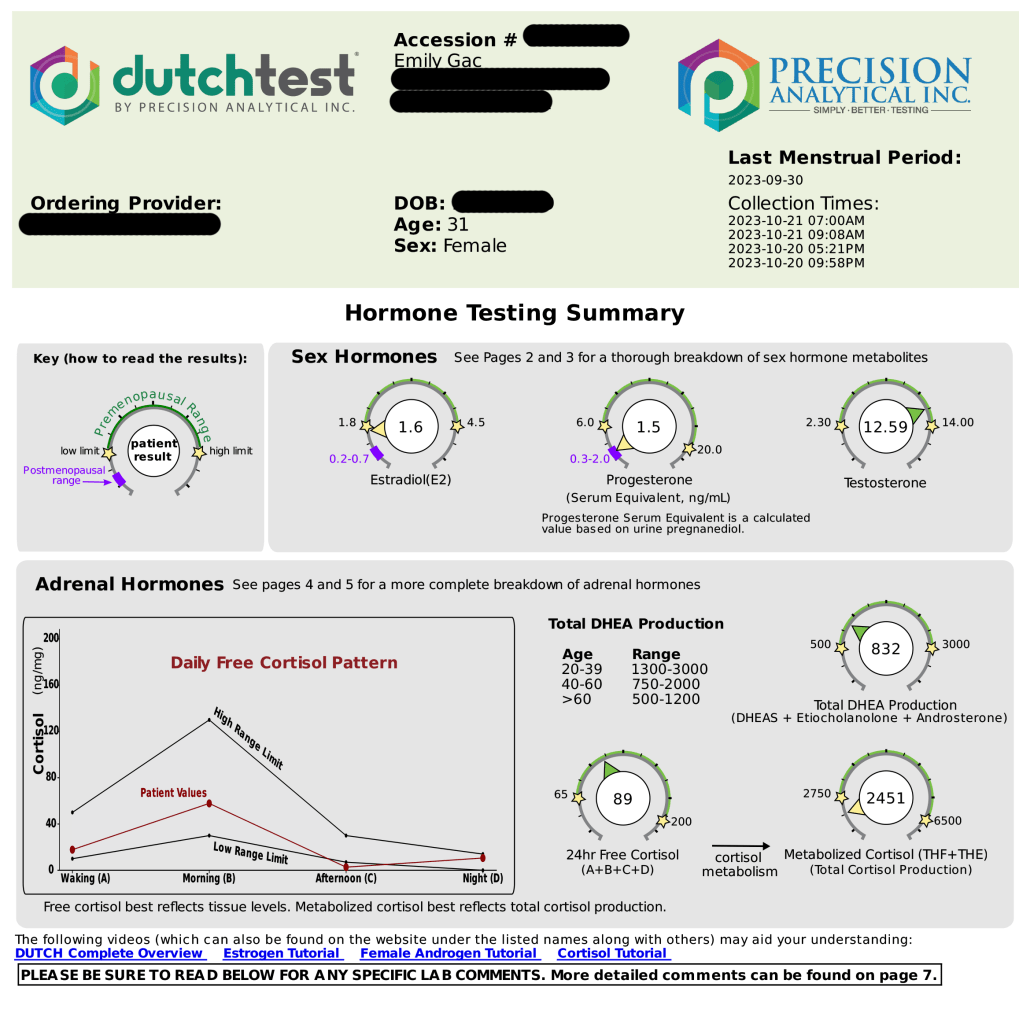
Adrenal Hormones
Results: Total DHEA Production is below the range for the patient’s age-dependent range. This implies that the adrenal glands are not producing appropriate DHEA levels. Low DHEA is associated with:
- Depression, diabetes, heart disease, inflammation and immune disorders.
- It can cause fatigue, low mood and low libido.
Causes: May be caused by hypothyroidism.
Recommended Treatment: Supplementing DHEA often raises both testosterone and estrogen, which may or may not be desirable here. DHEA may increase with adaptogens such as maca and rhodiola, which improve overall adrenal output. Supplement with adaptogens + vitamin C compound
Progesterone
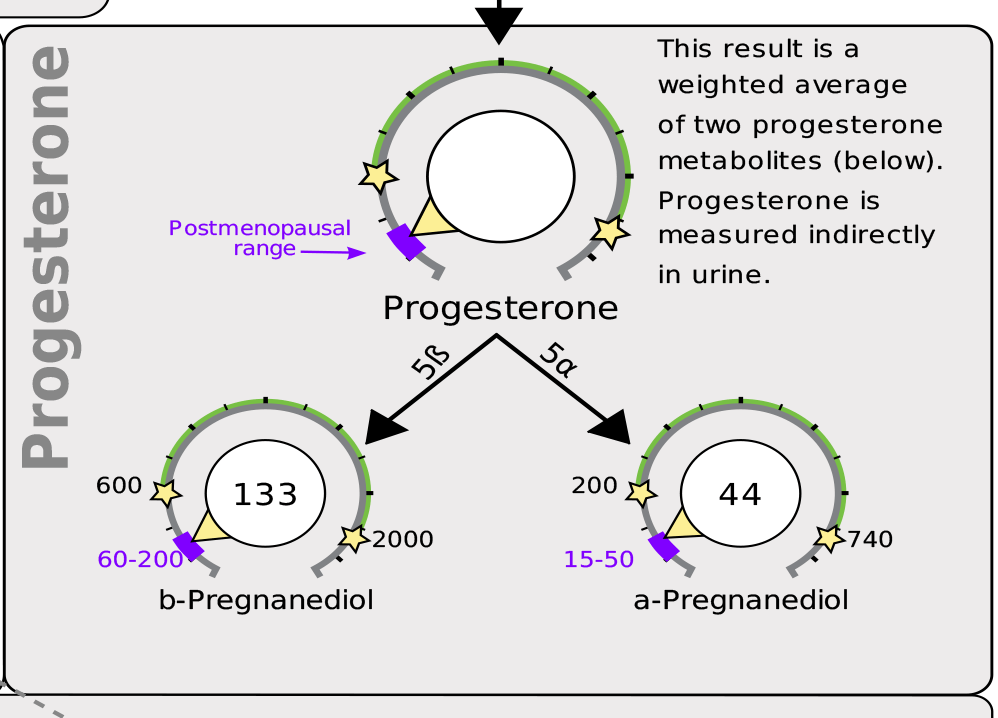
Results: Progesterone levels are below the luteal reference range compared to estrogen levels. This can cause symptoms such as:
- PMS
- Menorrhagia
- Mastaglia
- Moodiness
- Anxiety
- Insomnia
- Progesterone stimulates the GABA receptor in your brain, which helps you feel calm, so if you don’t have enough, you may have trouble sleeping and feel anxious.
Causes: PCOS, Hypothyroidism, high stress, low DHEA
Recommended Treatment: Work on reducing your stress. Focus on eating in a relaxed environment, meditating, yoga, exercising regularly, and deep breathing. Think adrenal support. Supplement with Vitex/B6, Vitamin C, and B complex.
Estrogens: Estrone and Estradiol
Phase 1: Metabolites
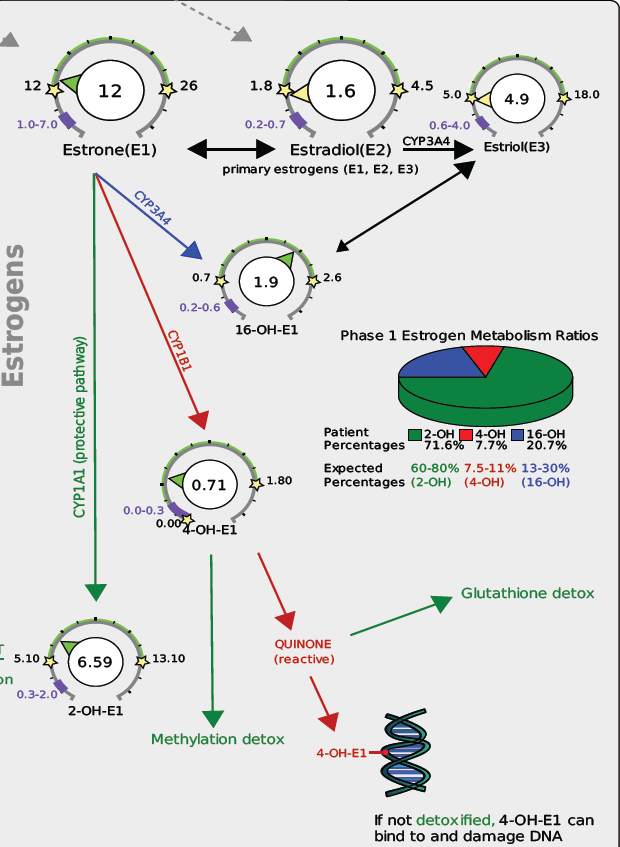
The chart above shows how the body metabolizes and detoxifies estrogen, specifically in my body. This is a 3-phase process. Estrogen, which is comprised of three different types, Estrone (E1), Estradiol (E2), and Estriol (E3), are broken down into three different metabolites in the first phase. Certain metabolites are more desirable than others due to the negative effects they can have on the body. You can learn more about these metabolites in this research study, but for the purposes of this analysis, I’ll summarize that 2-OH is the ideal metabolite and the one we want to be the highest in the body. The 4-OH and 16-OH metabolites need to have lower values. The chart below shows what level each of my metabolites are at and which one my body favors.
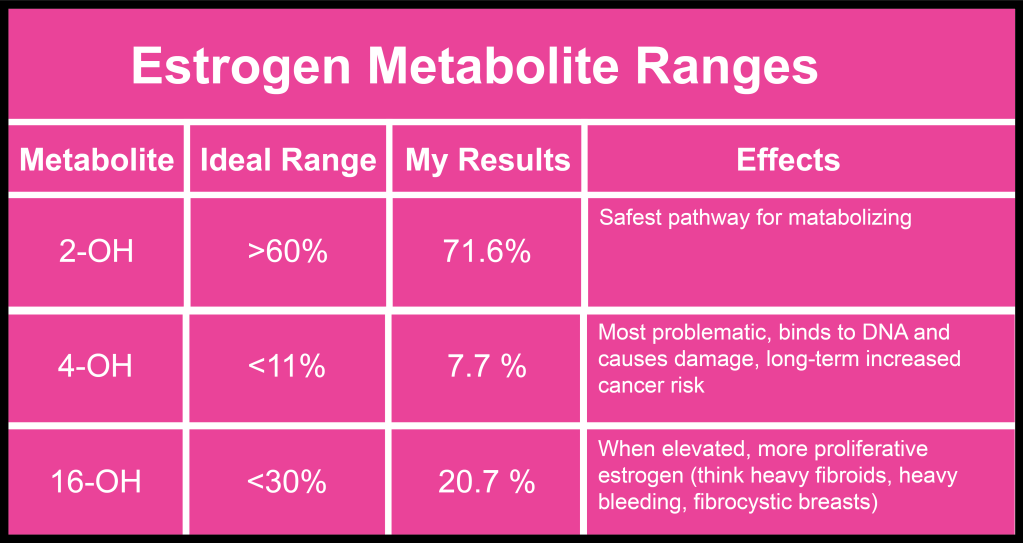
Results: Estrogen metabolites are in range and we would like to continue to support this process by maintaining lower 4-OH and 16-OH and shifting the majority of estrogen metabolism back to 2-OH.
Recommended Treatment: Focus on supporting liver function by eating more cruciferous veggies, fish oil, and flax seed. Limit smoking and alcohol consumption. Supplement with Diindolylmethane (DIM), which heavily favors the more protective 2-OH metabolism.
Phase 2: Methylation through COMT enzyme
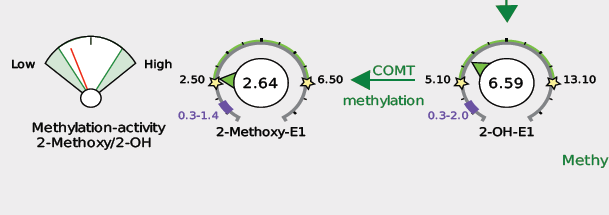
The second phase of estrogen metabolism is called methylation, where the COMT enzyme helps further break down estrogen so it can be processed out of the body. When methylation is slow this can cause a backup of estrogen that remains in the body and can lead to potentially harmful effects.
Results: Methylation of estrogen is slow and needs to be supported to prevent a back up of estrogen in the body.
Causes: The COMT enzyme responsible for methylation requires Magnesium and methyl donors.
- Deficiencies in folate or vitamin B6 or B12 can cause low levels of methyl donors.
- MTHFR genetic defects can make it more difficult for patients to make sufficient methyl donors.
Recommended Treatment: Supplement with Mg Glycinate, B complex. Additional support for methylation can happen by avoiding:
- Gluten
- Added sugar
- Preservatives
- Synthetic chemicals
- Processed meats
- Conventional dairy
- Refined vegetable oils
- Trans fats
- Processed/enriched grains
- Smoking
- Alcohol
Phase 3: Excretion through urine and/or stool
No comments or concerns with this phase. Continue to support this part with hydration and fiber.
Cortisol
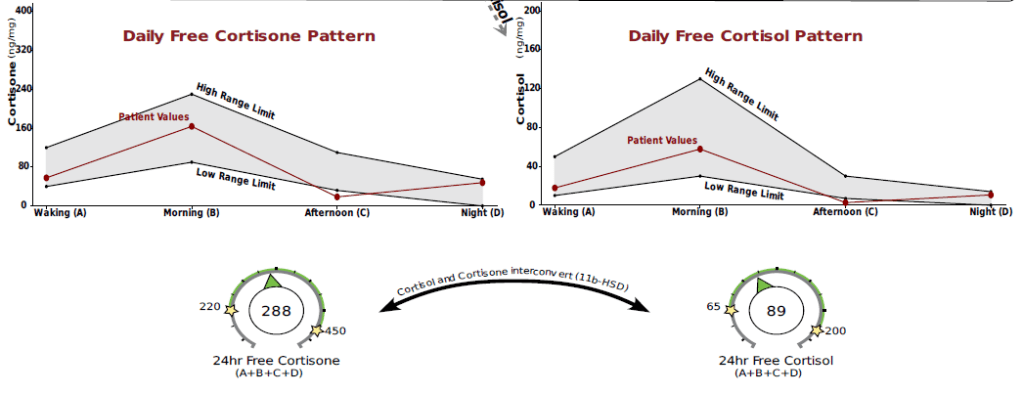
Results: My metabolized Cortisol, free cortisol and HPA-Axis activity are all low, indicating that cortisol production may be insufficient.
Causes: Higher cortisone levels may indicate the presence of a chronic stressor (mental, emotional, physical), or post infection. After a period of high cortisol, the body is trying to reset.
Goal: Increase cortisol
Recommended Treatment: Support adrenal glands with adaptogens, vitamin C (in whole food form, not ascorbic acid), and vitamin B complex.
Organic Acids Tests (OATs)
Methylmalonate (MMA)
Results: Low.
Causes: Vitamin B12 is required for COMT activity (estrogen methylation, dopamine breakdown) and PNMT activity (the enzyme that converts norepinephrine to epinephrine), but is also critical for memory, energy production (ATP synthesis), gait and more.
Recommended Treatment: Supporting B12 through foods, digestive support or supplementation.
Homovanillate (HVA)
Results: Low. HVA is the primary metabolite of dopamine. Low levels of dopamine are associated with:
- Depression, addictions, cravings, apathy, pleasure seeking behaviors, increased sleepiness, impulsivity, tremors, low motivation fatigue and low mood.
Causes: Impaired methylation, low B vitamins
Recommended Treatment: Support dopamine with the following:
- Exercising frequently
- Eat plenty of protein
- Continue probiotics
- Make sleep a priority
- Practice meditation
- Get plenty of sunlight
- Get a massage
- Incorporate music
Melatonin (MSH)
Results: Low.
Causes: Mold exposure can inhibit MSH. Low MSH is associated with insomnia and an increased perception of pain.
Recommended Treatment: Limit mold exposure by consuming less coffee from coffee shops, which are more likely to have mold due to lack of consistent sanitization of machines. Low quality coffee beans are also susceptible to mold due to their high moisture content and poor storage methods. Peanuts and peanut butter are also susceptible to mold.
What I Learned
The results from this test aligned identically with the symptoms I was experiencing after stopping birth control. Hearing my provider translate them and connect the dots felt incredibly validating, like a weight was lifted off my shoulders. I knew what I had been experiencing was real and I wasn’t crazy. While I was still speculative of whether the supplementation would be effective, I was elated at the prospect that there was an alternative to addressing these issues. A solution that wouldn’t cause harmful side effects, and a blueprint for how to effectively and holistically improve my lifestyle.
If you read my initial story about going off birth control, you’ll know that I started experiencing positive changes from my doctor’s recommendation within a few days. Over the next couple months my hormones began to regulate, and I started feeling so much better. It did take my acne some time to heal, but it eventually cleared up and now my skin looks so good and has regained its youthful texture and glow. It’s been almost a year since taking the DUTCH test for the first time and all my symptoms have resolved. I’m considering doing it as a yearly evaluation to make sure everything is in check, because it can help identify imbalances before they become a serious issue.
I’d love to know…
Have you taken the DUTCH test? How was your experience and what did you learn from it?

 That B*tch Emily
Leave a comment